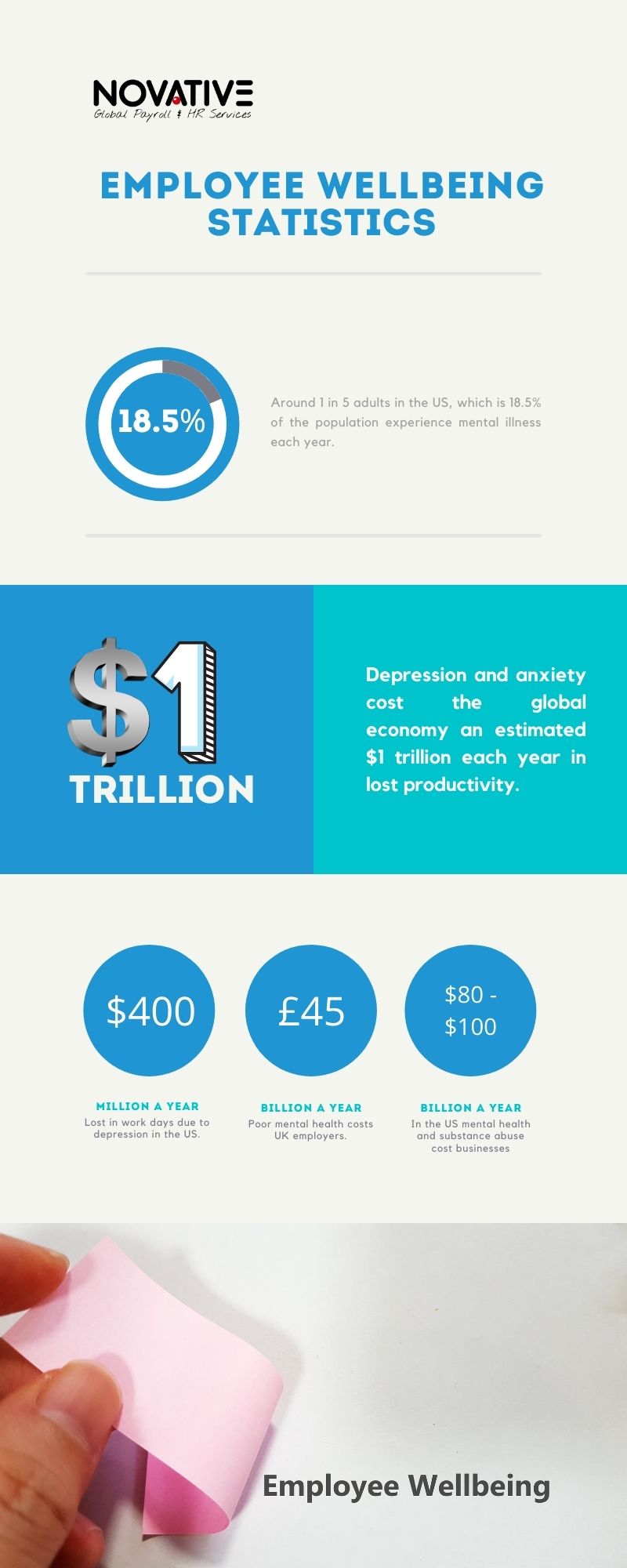
There is a huge loss both from employees and employers when employee’s well-being is not being prioritized, and these figures show this.

 Put staff well-being as a priority in all areas of business
Create an ethos of your employees being able to speak to you and be open. Let them feel they can talk openly without fear of stigma
Communication is a key factor in mental health, offer all communication methods for your employees, ‘open door’, FaceTime, or chat with whatever they feel most comfortable with.
Flexible working is a major bonus to employees, it also gives them more of a chance at a better work/life balance.
Make sure employees know what is expected of them at work, and what is involved in their job role.
Always check in and ensure employees are comfortable with their workload.
Employee development is so important to make sure your company is focusing on this, to help your employees feel like they are growing and contributing.
Ensure your company has a diverse and inclusive workforce.
Have policies in place to protect your employees from bullying and harassment.
Employee Well-being and the Pandemic
The pandemic has had an impact on people’s lives, both professionally and personally. Some may have been affected by the illness directly and need to time to get better (such effects such as long COVID-19). Loved ones may have been lost. Employees may have been furloughed and feel nervous about coming back after a long period absent. There are also those who have worked throughout the pandemic and might be close to burnout.
Employee – well-being is at a critical point, implementing some small processes, to begin with, can make a huge difference to keeping your employees happy. In the long run, you will find these processes will be beneficial to both the employee and your company.